
Every day, people search for the products and services your business offers. The question isn't whether they're searching — it's whether they find you or your competitor. That's what SEO decides.
1 What Is SEO, Really?
SEO — search engine optimization — is the practice of improving your website so it appears higher in search results when people look for what you offer.
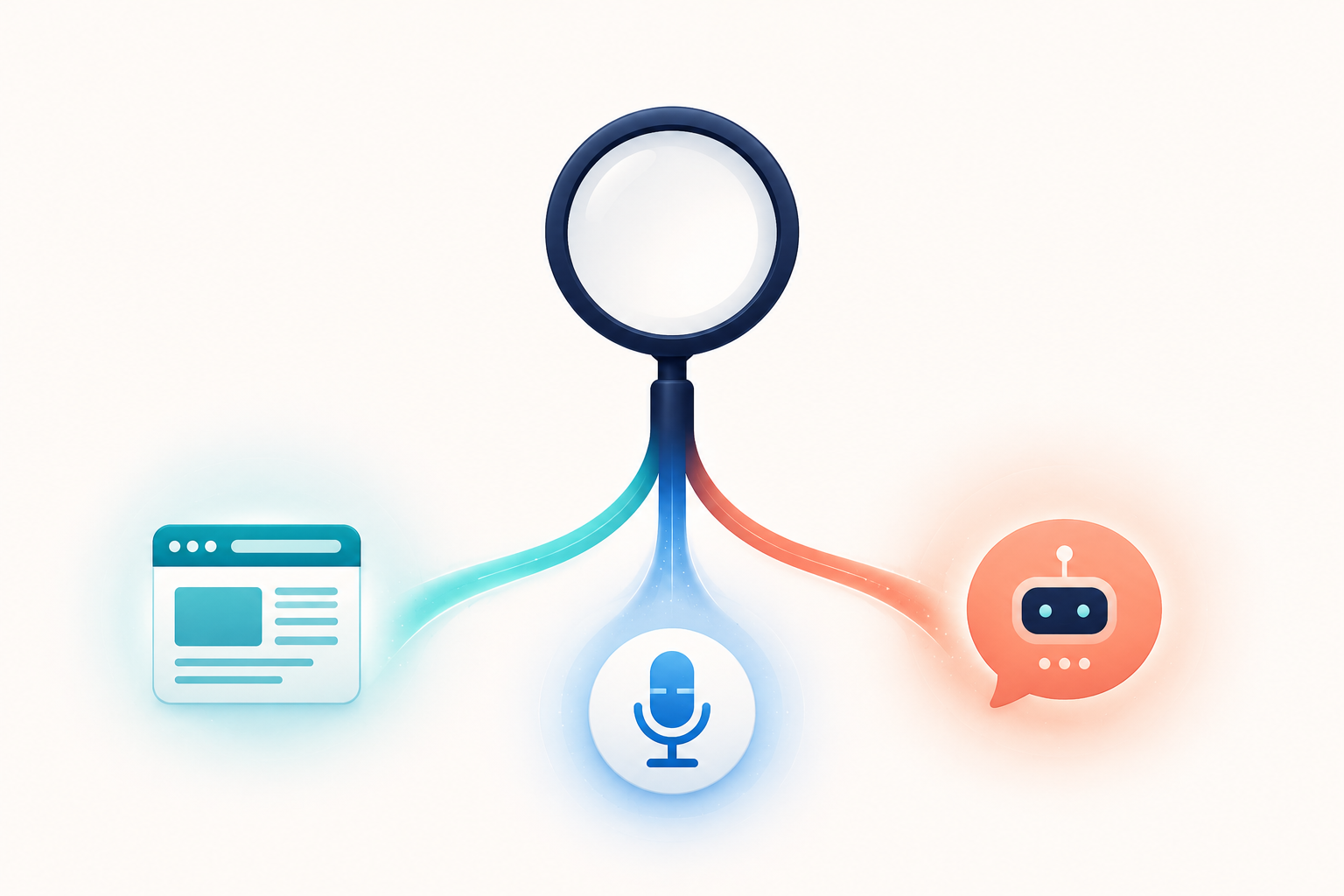
That's the simple version. The fuller picture: SEO is a combination of content strategy, technical website health, and authority building. Done well, it signals to Google (and Bing, and every other search engine) that your site is the most relevant, trustworthy, and useful result for a given query.
The key word there is organic. You don't pay for those positions the way you do with ads. When someone clicks your organic result, it costs you nothing. And unlike paid campaigns that stop working the moment you stop spending, well-executed SEO compounds — a single page can drive traffic for years.
Quick Definition
SEO is the process of optimizing your website's content, structure, and credibility so search engines rank it higher — and more of the right people find it, for free.
Three pillars hold it all together. On-page SEO covers the content and keywords on your pages. Technical SEO ensures your site is fast, crawlable, and structurally sound. Off-page SEO builds your authority through links and mentions from other credible sites. All three work together — weakness in any one area limits what the other two can achieve.
2 Why SEO Should Be a Business Priority
Every day, potential customers search for the exact products and services you sell. SEO determines whether they find you or a competitor. That's not a marketing nuance — it's the fundamental question of whether your business gets discovered online.

Consider the math. Google processes roughly 8.5 billion searches per day. A meaningful portion of those searches are commercial — people looking for products, services, answers, and solutions. Businesses that rank for relevant queries get in front of those buyers at the precise moment of intent. Businesses that don't are invisible to them.
Paid ads stop the moment you stop spending. A well-optimized page, by contrast, can drive consistent, high-intent traffic for years — with no ongoing cost per click.
That compounding effect is what makes SEO different from most other marketing channels. It takes time to build, but the return on investment extends far beyond any individual campaign. Businesses that invest in SEO today are building an asset. Those that delay are ceding ground that grows harder to reclaim.
3 Ranking and Visibility: Getting Found When It Matters
Search engine results pages — SERPs — are not equal. The gap between position 1 and position 5 is enormous, and the gap between page 1 and page 2 is even larger.
Research consistently shows the #1 organic result captures roughly 27% of all clicks for a given query. By position 5, that number drops to under 7%. By page 2, fewer than 1% of searchers ever arrive. This is not a small difference in traffic — it's the difference between a business that grows through search and one that doesn't.
Above position #1 sits the Featured Snippet — the "position zero" result that appears at the very top of the SERP, often capturing 35–40% of clicks on its own. Featured snippets are earned through well-structured, authoritative content that directly answers a search query. They don't happen by accident; they're the result of deliberate SEO.
One more important fact: search algorithms change constantly. Google updates its ranking criteria hundreds of times per year. Sites that keep their content current and technically optimized are best positioned to maintain and improve their rankings over time. Those that don't often see gradual — or sudden — drops.
4 Organic Traffic: Your Most Valuable Channel
Organic search traffic converts at higher rates than most other marketing channels, and the reason is simple: intent. People who find you through search are actively looking for what you offer. They're already partway through the buying decision before they arrive on your page.
Compare that to social media traffic or display advertising, where you're interrupting someone who wasn't looking for you. With organic search, the user initiated the search — they want a solution, and your page showed up. That's a fundamentally different dynamic.
The compounding nature of organic traffic also sets it apart. A piece of content that ranks well today will likely still be driving traffic six months or two years from now — with no additional spend. Paid advertising provides immediate visibility but demands ongoing budget. SEO requires upfront investment of time and effort, then pays dividends long after the work is done.
Better rankings lead to more high-intent traffic. More traffic creates more opportunities to convert. The cycle compounds over time, and businesses that start earlier have a meaningful structural advantage.
5 Authority and Trust: How Search Engines Decide Who to Believe
Google doesn't rank pages randomly. It uses hundreds of signals to assess whether a page deserves to appear at the top of results — and one of the most important is authority.
Authority is built over time and comes from multiple sources. Backlinks — links from other credible websites pointing to yours — act as votes of confidence. A link from a well-respected industry publication carries far more weight than a link from a low-quality directory. The quality of your backlink profile matters more than the quantity.
Google's E-E-A-T Framework
- Experience — Does the author have real, first-hand experience with the topic?
- Expertise — Is the content technically accurate and in-depth?
- Authoritativeness — Is the site recognized as a credible source in its niche?
- Trustworthiness — Is the site transparent, secure, and accurate?
Google's E-E-A-T framework (Experience, Expertise, Authoritativeness, Trustworthiness) guides how it evaluates content quality. Thin, generic content struggles to rank — not because of a single algorithm penalty, but because it fails to demonstrate genuine expertise. Thorough, specific, well-sourced content earns trust from both users and search engines.
Building authority takes time — there's no shortcut. But once established, it creates a meaningful competitive moat. Competitors can't outrank an authoritative domain overnight. The businesses that invest in authority building today will be significantly harder to displace a year from now.
6 UX and Technical SEO: The Experience Behind the Rankings
In recent years, Google has made user experience a direct ranking factor. Pages that load slowly, aren't optimized for mobile, or are difficult to navigate are penalized — not just by users who leave, but algorithmically through Google's Core Web Vitals.
Technical SEO covers the infrastructure of your site: page speed, mobile compatibility, site architecture, crawlability, structured data, and Core Web Vitals scores. Get these wrong and even excellent content struggles to rank — because search engines can't properly read, index, or evaluate it.
Every additional second of load time increases bounce rate significantly. Google's research shows 53% of mobile users abandon a page that takes more than 3 seconds to load.
Over 60% of searches happen on mobile devices. Google uses mobile-first indexing, meaning the mobile version of your site is what it primarily evaluates for ranking.
A well-structured site helps search engines understand the relationship between your pages — and helps users navigate to what they need. Both matter for rankings.
Google's three UX metrics — Largest Contentful Paint, Interaction to Next Paint, and Cumulative Layout Shift — are now direct ranking signals. Passing all three is table stakes.
The user experience dimension extends beyond technical metrics. Easy navigation, clear information hierarchy, logical internal linking, and a frictionless path to conversion all contribute to positive UX signals — lower bounce rates, longer dwell time, more pages per session. These behavioral signals feed back into rankings.
Quality SEO and quality UX are not separate disciplines. They reinforce each other. A site built for users tends to perform well for search engines, and a site optimized for search engines tends to be easier for users to navigate.
7 Does Every Business Need SEO?
If people search for what you sell — and they almost certainly do — then SEO matters to your business. The scale of investment varies by industry, competition level, and goals. The principle is universal.
Every product category is a search opportunity. Ranking for commercial queries like "buy noise-cancelling headphones" or "best running shoes for flat feet" drives direct revenue at zero cost per click.
Local SEO determines who appears in Google Maps and "near me" searches. For restaurants, clinics, law firms, and service businesses, local visibility directly drives foot traffic and phone calls.
High-intent searches like "project management software for agencies" or "CRM for small business" drive qualified pipeline. B2B buyers conduct extensive research before engaging sales — they need to find you first.
Attorneys, accountants, consultants, and agencies all depend on being found when someone needs them. A single new client from organic search can represent thousands of dollars in revenue.
The businesses that tend to underinvest in SEO are often the ones that don't fully understand the opportunity cost. Every click a competitor earns from organic search is a potential customer who didn't find you. Over months and years, that gap compounds into a meaningful difference in growth trajectory.
8 Where to Start
SEO can feel overwhelming when you first survey everything it involves. The good news is that you don't need to do everything at once. A focused, sequential approach is more effective than trying to optimize everything simultaneously.
Understand what your customers actually search for — not what you assume they search for. Build your content strategy around real search demand, mapped to stages of the buyer journey.
Ensure your pages clearly communicate their topic to both users and search engines. Title tags, headers, meta descriptions, and content structure all play a role.
Identify and resolve structural issues — crawl errors, slow pages, duplicate content, broken links — that prevent search engines from properly evaluating your site.
Build topical authority by creating comprehensive, genuinely useful content across your core subjects. Depth and relevance matter far more than volume.
Earn mentions and backlinks from credible sources in your industry. Focus on genuine value — great content naturally attracts links over time.
Most businesses see meaningful organic growth within 3 to 6 months of consistent SEO effort. The compounding effect becomes more pronounced over 12 to 24 months. It's a long-term investment — but the businesses that start now will be significantly better positioned than those that wait.